
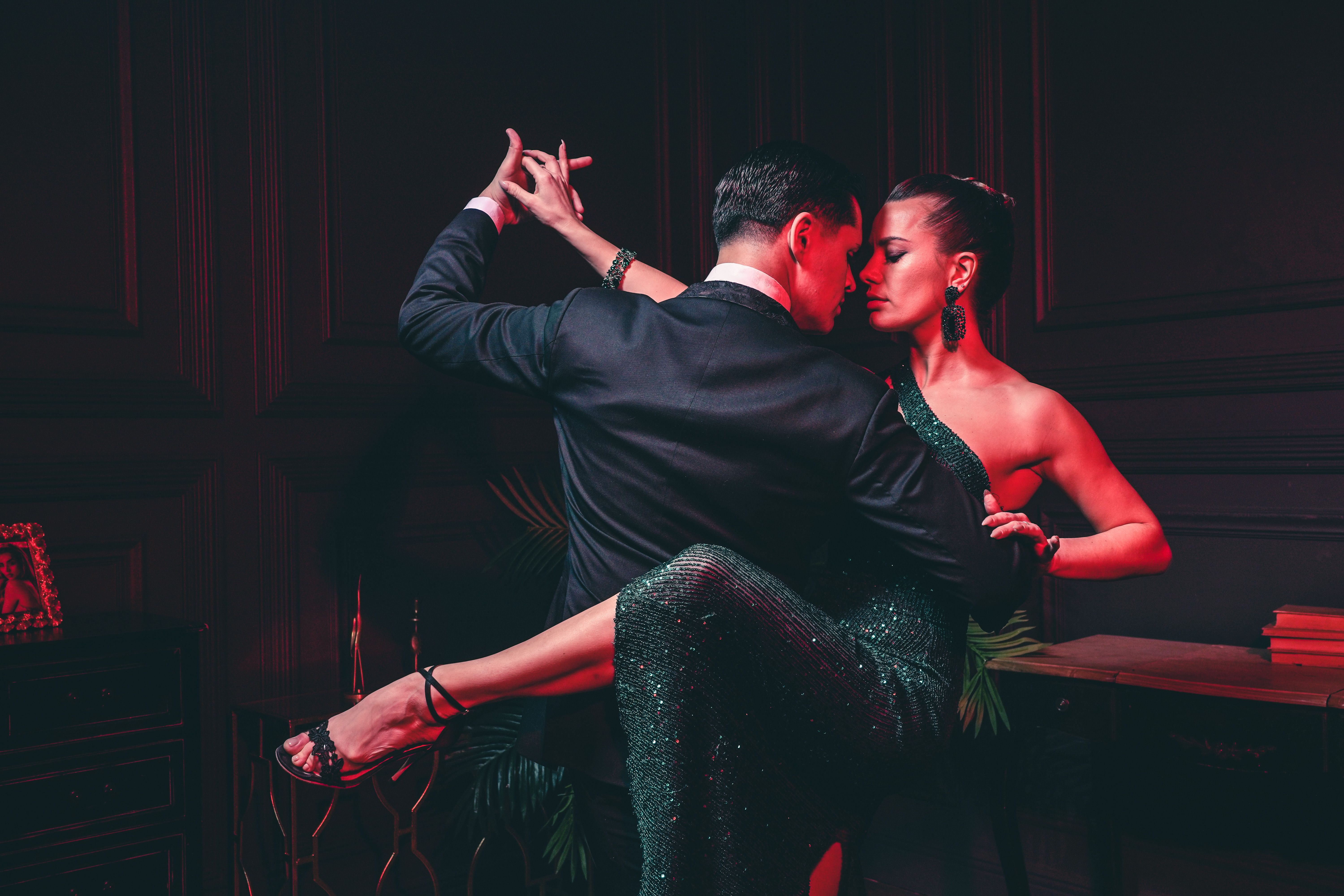
For those of you out there looking to learn a fun, elegant, sophisticated dance steeped in history, ballroom dance is probably up there in terms of popularity. People hear ‘ballroom’ and automatically think cocktail dresses, black ties and tuxedos, decadent ballrooms complete with enormous crystal chandeliers, and things of that nature. In truth, there’s much more to ballroom dancing than that.
To begin with, the term ‘ballroom dancing’ is a broad, blanket term used to describe a plethora of different dance styles. Each dance style is uniquely characterized in its own way, with its own history and its own backstory, from a different part of the world. Some you will be familiar with, and some, you may not have heard of until reading this post today.
From the Paso Doble and Tango to the Jive and Lindy Hop, here is a complete guide to some of the different types of ballroom dance and their origins.
A Brief History of Ballroom Dancing
Don’t worry, we know that there are a variety of different types of ballroom dancing out there, each one with its own backstory, so the following is just a very brief history of the origins behind ballroom dancing, and how it all came about. We’ll look at each one individually a little later on.
Ballroom dancing is now associated with the upper classes. It’s typically performed in grand ballrooms, with everybody dressed fashionably, sipping champagne and nibbling on canapes as elegant music plays in the background. Regardless of the style of dance you happen to be participating in, it’s a lavish pastime that just screams ‘opulence’.
Despite its fancy façade however, ballroom dancing’s origins are very different. Originally, like so many other forms of dance, its origins are shrouded in peasantry, poverty, and suppression. As early as the 16th century, across Europe and South America, peasants and the impoverished would gather at taverns, weddings, funerals, and celebrations. Here they would let their hair down (metaphorically and sometimes physically), eat, drink, and dance to lively music.
Eventually, certain movements and dances started to become synonymous with certain styles of music, and various forms of dance were born. As these dances became more popular, they spread throughout the continents, and began appearing in Royal Courts across Europe. These dances became far more civil affairs and were typically performed in pairs, with slow and methodical movements performed to different styles of music, at different tempos.
It wasn’t until Germany and Austria discovered what is now known as ‘The Waltz’ however, that ballroom dancing really took off. Whereas before ballroom dancing was all about being regal and refined, The Waltz took that principle and flipped it on its head. It was the first of its kind to introduce the ‘closed hold’ where partners hold each other tightly, and dance in far closer proximity to one another, in a more intimate fashion. Many credit this very dance with the creation of public dance halls.
Interestingly, ballroom dancing gets its name from the Latin word ballare, which literally means ‘to dance’. A ballroom is therefore a room where people dance. Simple, but effective, right?

Different Types of Ballroom Dancing
Okay, so now that we have a very rough idea of where and how ballroom dancing originated, and indeed, where it gets its name from, all that’s left to do is learn about the dances themselves.
Here are just a few of the most popular types of ballroom dances still danced to this very day:
Waltz
Starting off with arguably the most important example of ballroom dancing of all, and the one which helped lay the foundations for the ballroom dancing we know and love to this very day, we have The Waltz.
Performed at 3/4 time, with 28 bars per minute, The Waltz originated in Germany features energetic, yet meticulous movements, in an up close, intimate setting. As it is so popular, there are several iterations to choose from, including a slower, more romantic English Waltz, along with a Slow Waltz, which is fairly self-explanatory.
Viennese Waltz
The Viennese Waltz originated in Vienna, Austria, and is very similar to the traditional German Waltz, though it is perhaps a little more lively, energetic, and faster paced. This is likely more akin to the types of dances you’d find peasant folk performing in their villages on a hot summer’s eve, after a few tankards of ale.
Quickstep
The Quickstep is often considered to be the younger brother, or the smaller cousin, or the Foxtrot. It is performed in a similar way, except for the fact that faster-paced, more energetic jazz music is usually played/performed, which means that the dance itself is usually quicker, featuring faster footwork and more rhythmic motions.

Foxtrot
The Foxtrot is an American dance performed to contemporary and/or classical jazz, which is characterized by the fact that it can be performed at a variety of different tempos. With the Foxtrot, the jazz music/musicians really dictate this dance, and dancers simply let their feet do the talking, and go where the music takes them.
A relatively new form of Ballroom dance, The Foxtrot didn’t really come to prominence until the 20th century. Today however, it is one of the most recognizable ballroom dances on the planet.
Tango
Ballroom Tango is not to be confused with the Argentine Tango. Though the two share similarities, they’re completely different to one another, and you’re about to discover.
Ballroom Tango features 32 bars per minute, and is performed at a 2/4 or 4/4 time signature. It’s a sensual, dramatic, and romantic dance featuring intimate embraces, improvisation, synchronicity, and intricate steps and footwork.
The dance originated from the Argentine Tango, before being adapted by European and American dancers. If you’ve ever seen James Cameron’s True Lies, starring Arnold Schwazenegger, he famously dances a Ballroom Tango twice in the movie. If not, check it out as soon as you can as it’s a classic.
Rumba
Want your ballroom dances oozing with sensual Latin charm and sex appeal? If so, the Rumba is perfect.
Having originated in 19th century Cuba, it features a combination of West African music, coupled with passionate Spanish folk melody. The dance itself features sensual hip movements known as ‘Cuban motion’, coupled with fast and rhythmic head and body movement, performed mostly, on the spot.
Many consider the Rumba to be one of the most exhilarating, sensual, and empowering ballroom dances ever discovered. Like golf, with Rumba, it’s all in the hips.
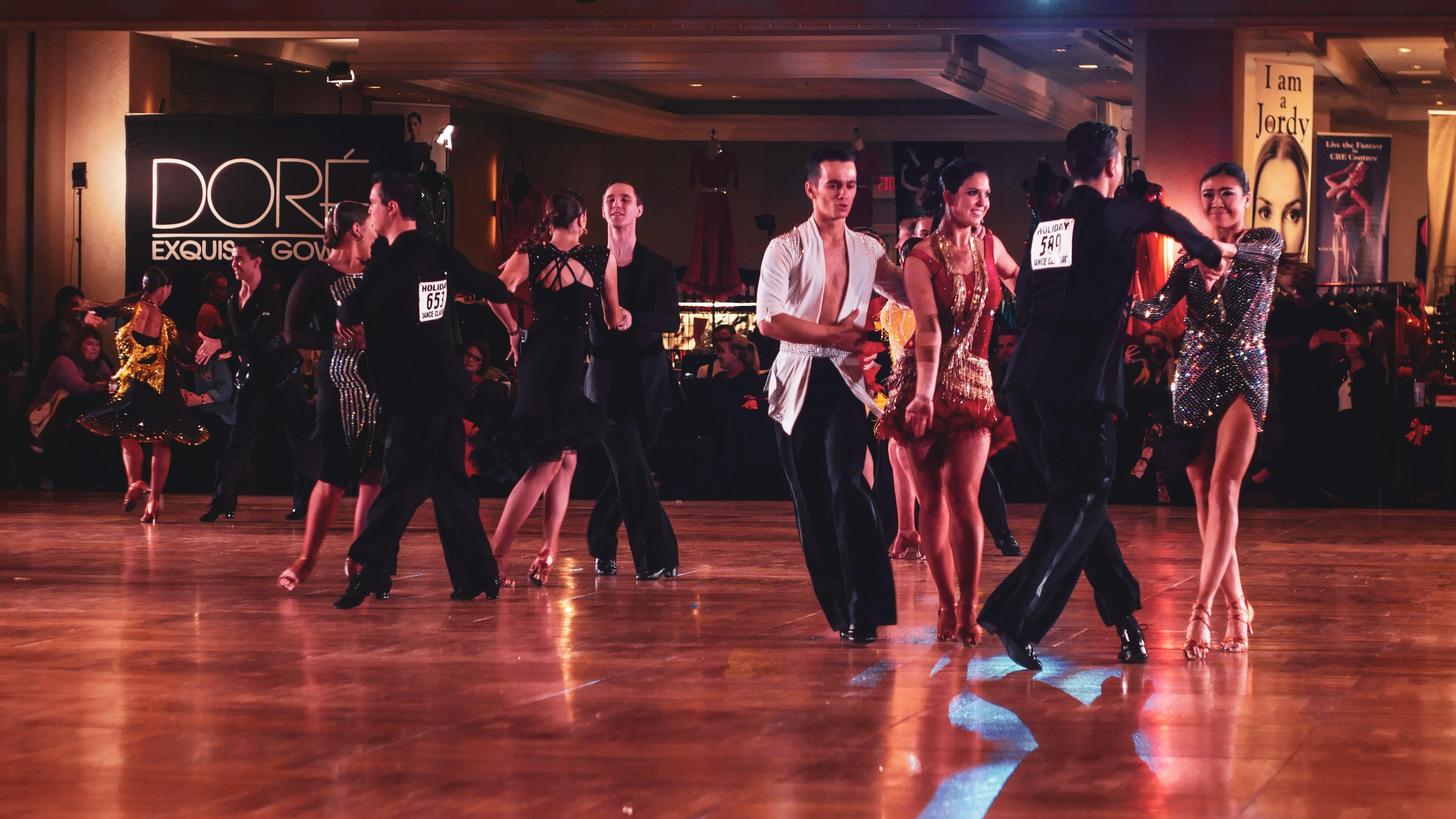
Cha-Cha
Finally, we’ll finish off with a beginner-friendly dance that also originated in Cuba, back in the 1950s.
The Cha-Cha is a flirtatious, energetic, fiery dance that is characterized by three steps performed in quick succession (cha-cha-cha). It is set to 4/4 time music and is performed at a tempo of around 30 beats per minute.


 Continue with Google